
Hair, density & alopecia
Hair loss & alopecia
Understanding the origin of the hair loss in order to preserve the hair capital and to consider a restoration when it is indicated.
Understanding this concern
Hair loss or a loss of density can have very different origins. Androgenetic alopecia, effluvium or certain medical causes do not call for the same management.
This is why my approach begins with a hair assessment and a trichoscopy. The analysis of the scalp, of the density, of the diameter of the hairs and of their possible miniaturisation makes it possible to guide the diagnosis. When that is necessary, further investigations may be proposed.
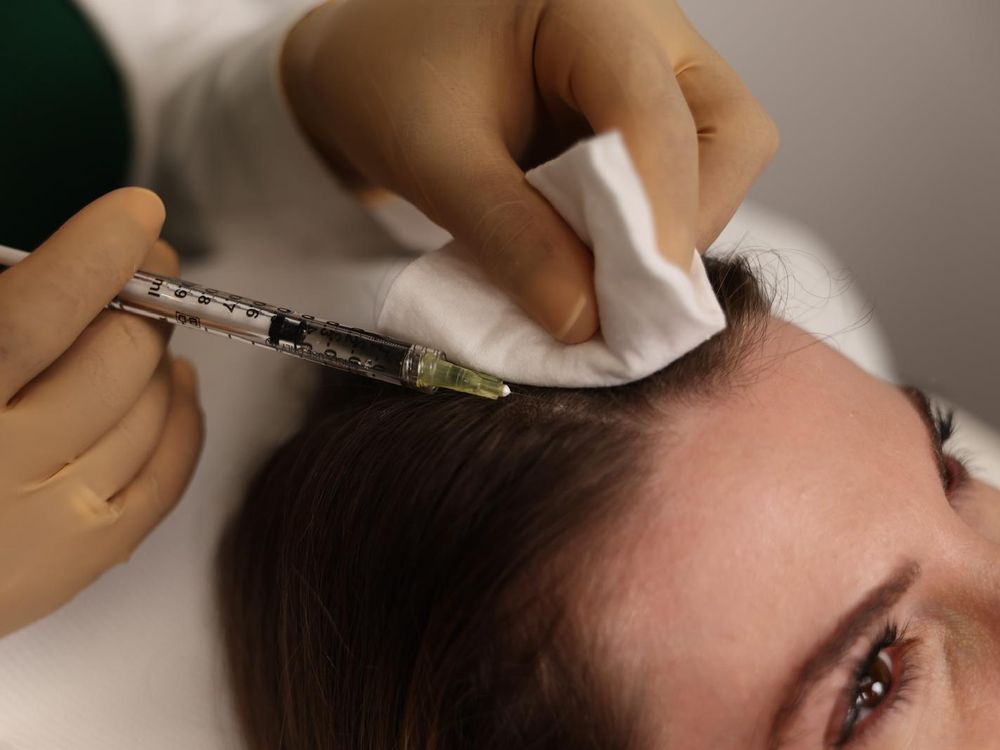
The priority is to preserve the existing hair before speaking of restoration. Depending on the diagnosis, the strategy may include medical treatments, topical or injectable treatments, mesotherapy, PRP/PRF, exosomes or hair laser.
When a hair transplant is indicated, it forms part of this overall strategy. The donor area, the foreseeable progression of the alopecia, the design of the frontal hairline and the number of grafts must be anticipated in order to build a result that remains consistent over time.
The aim: to preserve the hair capital, to slow its progression when that is possible and to restore density naturally when a transplant is indicated.
Indications
Hair loss
Loss of density & alopecia
Hair transplant plan
Practical information
Prior consultation
- Assessment
- Consultation & trichoscopy
- Hair transplant
- On quotation after assessment
Treatments in this section
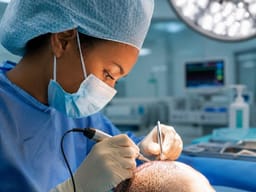
Hair transplant (FUE)
Transplantation of follicles using the FUE technique (hair, beard, eyebrows), after an individualised hair diagnosis.
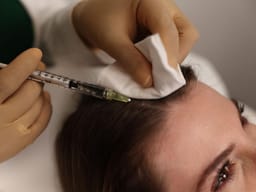
Hair treatments
Medical treatments of the scalp — boosters and mesotherapy, topical, oral or injectable treatments — combined according to the assessment in order to slow hair loss and preserve the existing hair.
Hair diagnosis & assessment
Consultation and hair assessment, including a genetic test in some cases, in order to guide management.