
Hair & scalp
Hair transplant (FUE)
Transplantation of follicles using the FUE technique (hair, beard, eyebrows), after an individualised hair diagnosis.
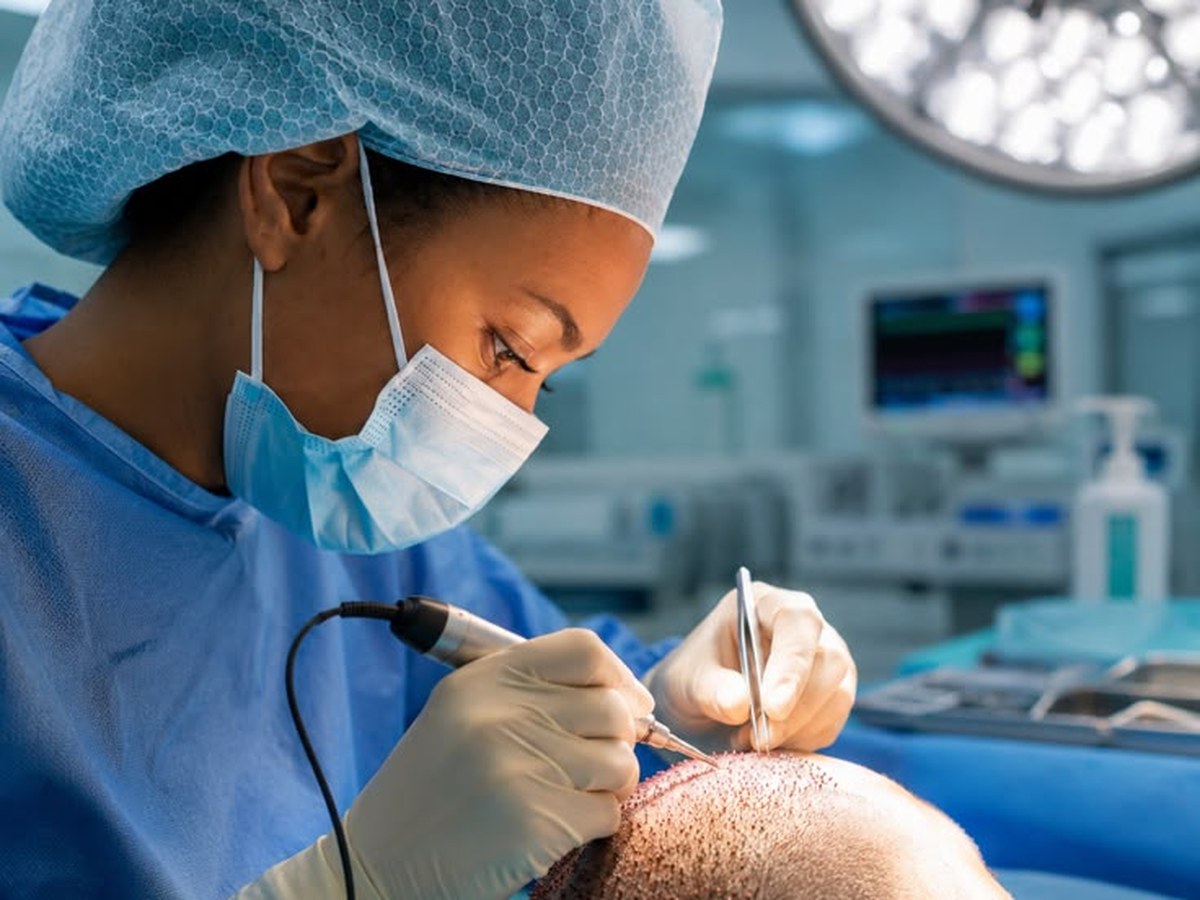
Hair transplantation by FUE (follicular unit extraction) is a microsurgical procedure. The follicles are harvested one by one from a donor area, most often the occipital crown, then reimplanted in the recipient areas, following the orientation and the angle of the existing hair. No strip of scalp is removed. The procedure takes place under local anaesthesia.
A strategy thought out for the long term
A hair transplant is not simply a matter of implanting hair. It forms part of a genuine medical strategy for preserving the hair capital. My aim is simple: to do everything possible so that a single transplant is needed over the course of the patient’s life. This means thinking from the outset about the design of the frontal hairline, the distribution of the grafts, the foreseeable progression of the hair loss and, above all, the preservation of the donor area.
The technique may concern the scalp (frontal hairline, temporal recessions, vertex), as well as the beard and the eyebrows. It applies in particular to androgenetic alopecia and to certain forms of baldness in women, the assessment of which follows a specific approach. Depending on the situation, the procedure may not be indicated; medical treatment may be proposed beforehand or in addition.
Comfort and variants
For patients who wish to go through their procedure with greater peace of mind, the transplant may be carried out under sedation, when the medical indication allows it. In certain eligible patients, it may also be carried out while keeping the hair long, in order to limit the immediately visible aesthetic change; this approach, of particular interest when discretion is a priority, is assessed case by case during the consultation. Beard transplantation and eyebrow transplantation rest on the same principles of meticulousness, respecting the orientation and the angle specific to each area.
Beyond the transplant: preserving the hair capital
A successful transplant should not make us forget that hair which has not been transplanted may continue to change. This is why, when it is indicated, I combine medical management around the transplant — topical treatments, systemic treatments, injectables, and sometimes laser technologies — before and after the procedure, in order to preserve the existing hair as far as possible and to support the result over time.
The full course of the procedure, step by step, is detailed on the page Your hair transplant journey (in French).
After-effects may occur in the days that follow: redness, small crusts, oedema, sensations of numbness or itching. Shedding of the implanted hair may also be observed. Care and protection instructions are provided, and follow-up is arranged. The result is appreciated gradually over time and can neither be predicted nor quantified in advance. A prior consultation with hair diagnosis is mandatory: it allows the indication to be assessed, the alternatives, the risks and the after-effects to be set out, and written information to be provided. A period of reflection is observed before any procedure.
Indications
- Androgenetic alopecia
- Densification (beard, eyebrows)
- Management of baldness in women
Precautions & aftercare
- Prior consultation with hair diagnosis is mandatory.
- After-effects and post-procedure care detailed in consultation.
- Progressive result; contraindications assessed case by case.